Evidence Collection in Fire Investigation
Credit Hours:
10
Approximate reading time:0 Hours
Approximate online time:10 Hours
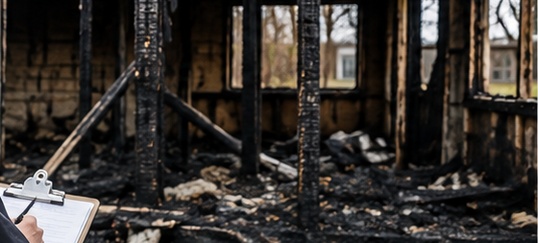
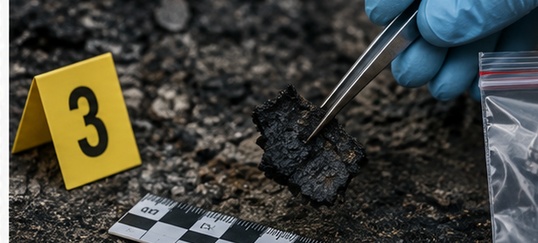
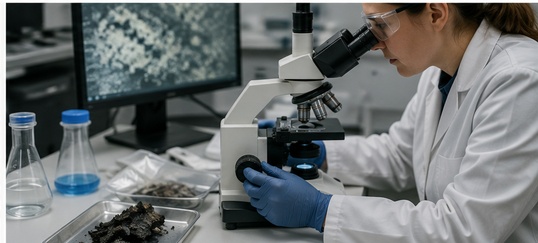
Evidence that is mishandled at the scene cannot be repaired in the laboratory or in the courtroom. This ten-session synchronous course walks investigators through the full life cycle of physical evidence in a fire or explosion investigation: establishing lawful authority to be on the scene and to seize items, documenting conditions before anything is moved, connecting the evidence plan to the origin and cause hypotheses under examination, selecting and using the right containers, controlling contamination, maintaining an unbroken chain of custody, submitting usable samples to a laboratory, and defending every one of those decisions under cross-examination.
Sessions meet live over Zoom for one hour each week for ten weeks. Two sessions are delivered as pre-recorded (Simulive) presentations with the instructor present in chat for questions. Each session is recorded and posted automatically to the program page, so registrants who cannot attend live can watch the recording and still receive attendance credit for that session.
Nine graded assignments are distributed across three topic groups. Assignments are downloaded from the program page, completed offline, and uploaded for instructor review. The Skills Challenge — the course final examination — unlocks only after all ten session recordings have been watched.
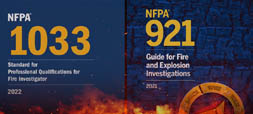
This course is built on NFPA 921, Guide for Fire and Explosion Investigations (2024 edition), NFPA 1033, Standard for Professional Qualifications for Fire Investigator, and the relevant ASTM E-series standards for the collection, preservation, and laboratory handling of fire debris and physical evidence.
Speakers
-
Dana R. Okonkwo, MS, IAAI-CFEI
Chief Investigator, Bauman, LLC.
Dana Okonkwo is a forensic chemist who ran the fire debris section of a regional crime laboratory for eleven years, analyzing more than 4,000 fire debris submissions. Her teaching focuses on the gap between what investigators expect a laboratory to deliver and what the analytical methods can actually support. She holds an MS in forensic chemistry and serves on a technical working group for ignitable liquid residue methods.
-
Marcus D. Whitfield, IAAI-CFI
Lead Investigator, HBW Investigations
Marcus Whitfield spent twenty-two years with a metropolitan fire marshal's office, the last nine as supervising investigator for a unit handling roughly 300 origin-and-cause determinations a year. He now consults on evidence handling and testifies as an expert in fire cause litigation. He has taught scene documentation and evidence preservation to state and municipal investigators since 2011, and has been qualified as an expert in state and federal court on fire origin, cause, and evidence handling.
Sessions
-
Legal Authority and the Duty to Preserve
8/17/2026 2:15:00 PM -
Documenting the Scene: Photography, Notes, and Diagrams
8/17/2026 8:00:00 PM -
From Origin Hypothesis to Evidence Plan
8/18/2026 12:35:00 PM -
Fire Debris Sampling and Comparison Samples
8/20/2026 9:45:00 AM -
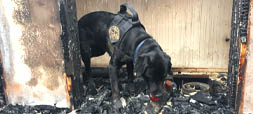
Ignitable Liquid Detection: Canines, Detectors, and Their Limits
8/21/2026 3:00:00 PM -
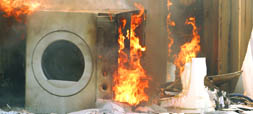
Electrical Artifacts, Arc Mapping, and Appliance Evidence
8/21/2026 4:30:00 PM -
Packaging, Labeling, Chain of Custody, and Storage
8/21/2026 5:05:00 PM -
Recitation
8/24/2026 2:20:00 PM -
Additional Webinar
8/25/2026 8:45:00 AM -
Additional Webinar 2
8/25/2026 10:30:00 AM -
Digital, Vehicle, and Alternative-Fuel Evidence
8/26/2026 9:55:00 AM -
Wednesday Afternoon Webinar
8/26/2026 2:00:00 PM -
Wednesday Later Afternoon Webinar
8/26/2026 4:30:00 PM -
Working With the Forensic Laboratory
8/27/2026 3:00:00 PM -
Cathy - Ian Test
8/27/2026 4:00:00 PM -
Cathy - Ian Test Meeting
8/27/2026 5:15:00 PM -
Evidence in Court: Reports, Disclosure, and Testimony
8/28/2026 6:55:00 AM